

Contents
Introduction: why Thought Leader Ads are essential for SaaS growth
LinkedIn Thought Leader Ads are the highest performing ad format for B2B SaaS because they amplify something buyers already want: expert insight from real people. Not brand polish. Not sales messages. Real thinking.
This guide breaks down everything you need to know to run Thought Leader Ads well, from content strategy and campaign setup to retargeting, metrics, and scaling.
1. What LinkedIn Thought Leader Ads are
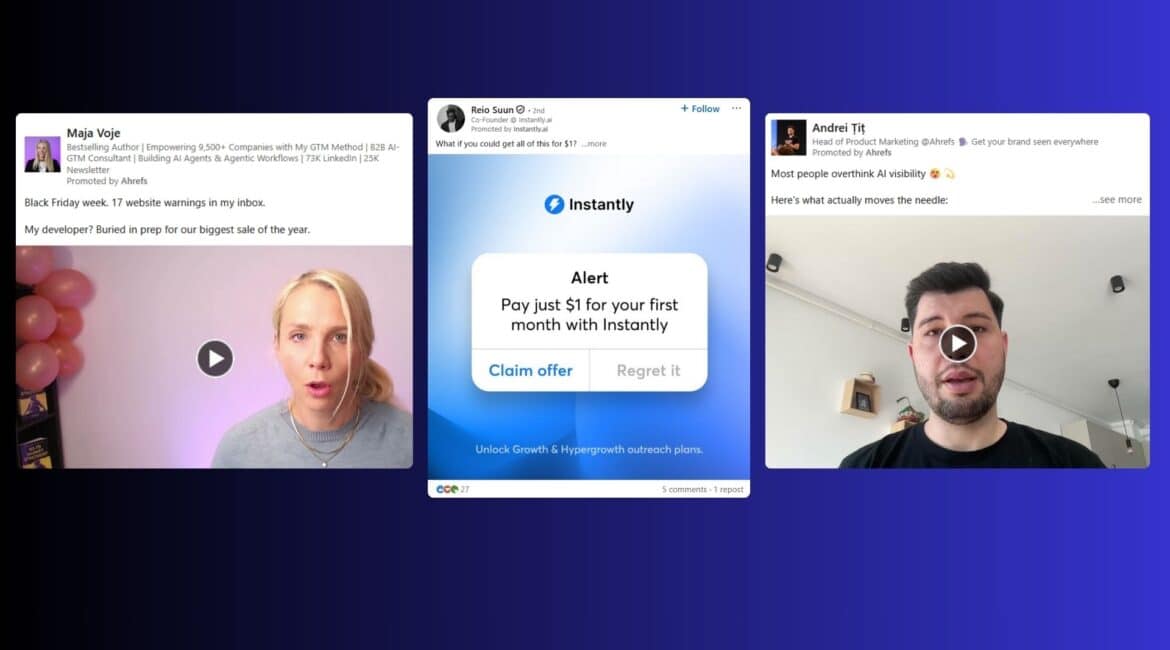
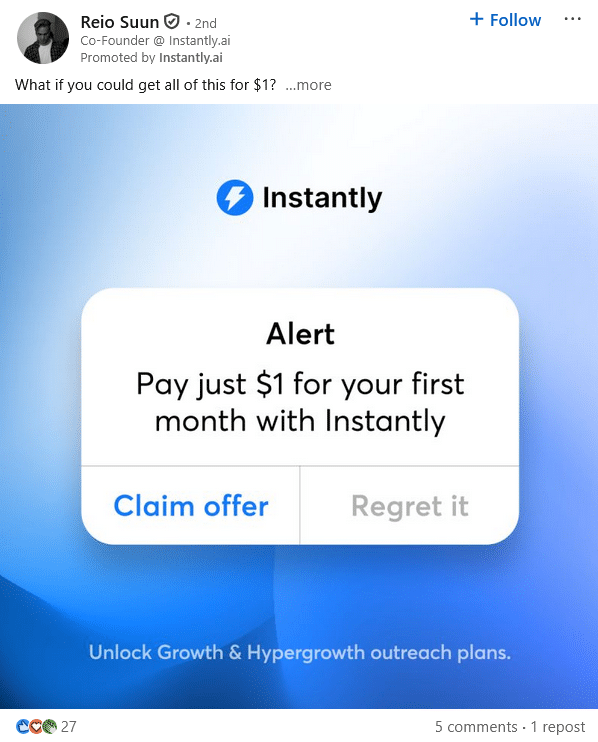
Thought Leadership Ads allow you to promote personal posts from real LinkedIn profiles. Instead of seeing an ad from a company page, your audience sees a post from a human, with a small “Promoted by [Company]” label underneath. This makes the content feel organic, trustworthy, and more engaging than traditional ads.
Here’s an example of an image LinkedIn Thought Leader Ad by Instantly:
1.1 How Thought Leader Ads differ from traditional LinkedIn Ads
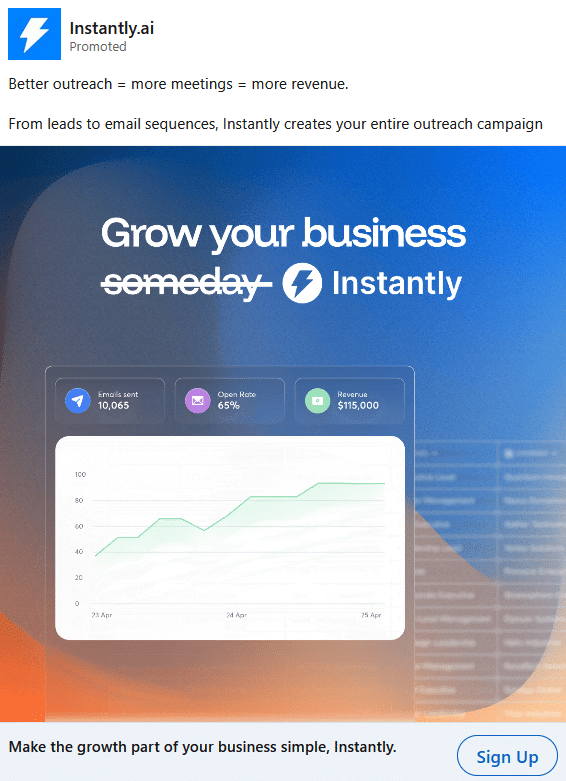
Traditional LinkedIn ads originate from a company page and rely on corporate design and performance-driven messaging. Here’s an example of a traditional company page LinkedIn Ad, also from Instantly:
Thought Leader Ads rely on authenticity. They:
- originate from a real person’s LinkedIn profile
- retain all organic comments, likes, and shares
- blend seamlessly into the feed
- allow longer videos from personal profiles
- deliver higher trust and engagement
Buyers engage more deeply because the message comes from a person rather than a brand.
1.2 Why Thought Leader Ads feel more trustworthy
People naturally trust people more than companies. A personal perspective feels honest, relevant, and grounded in lived experience. This is especially important in SaaS, where buyers want to understand who built the product and how they think about the problems they solve.
1.3 Limitations of LinkedIn Thought Leader Ads
Thought Leader Ads are powerful but come with constraints:
- No CTA button: any call to action must be placed in the post text
- Only two objectives: Engagement or Brand Awareness
- Posts must be newer than 6 months: older posts cannot be boosted
- Dependence on the profile owner: if they leave, their posts cannot be used
These limitations require a content-first approach rather than a performance-first mindset.
2. Why Thought Leader Ads work so well for B2B SaaS
Thought Leader Ads perform exceptionally well in SaaS because they match how modern buyers prefer to learn. Instead of responding to corporate messages, buyers pay attention to people who understand their world and share practical insights. TL Ads let you put those voices directly into your ICP’s feed in a format that feels natural and trustworthy.
Thought Leadership Ads outperform traditional ads because they align with modern buyer behavior. They:
- insert real expertise into the feed
- educate before selling
- generate organic-feeling engagement
- build trust faster than corporate ads
- create warm audiences based on high quality signals
For SaaS companies competing in crowded categories, this advantage compounds quickly. Buyers get to know your experts long before they consider a demo, which shortens sales cycles and increases trust.
2.1 The core reasons TL Ads outperform traditional Ads
- People trust people more than brands. A real face and voice feel authentic, transparent, and grounded in experience.
- Expertise beats promotion. TL Ads teach, explain, and clarify problems instead of selling.
- They drive deeper consumption. Buyers often watch several minutes of video from a person but scroll past branded creative instantly.
- They generate richer intent signals. Video views, profile clicks, comments, and shares create powerful warm retargeting audiences.
- They feel native. TL Ads look like normal LinkedIn posts, not ads, which lowers resistance and increases engagement.
- They fit non linear buying behavior. Buyers revisit your content over weeks or months as needs arise.
- They reduce dependence on organic reach. You control distribution and can guarantee your ICP sees your strongest ideas.
- They are cost effective. Authentic webcam videos outperform expensive brand assets in most SaaS categories.
Very few B2B brands run Thought Leader Ads today, which keeps auctions unsaturated and performance strong. For SaaS companies with long buying journeys and complex value propositions, TL Ads are one of the most efficient ways to build trust, warm up your market, and stay top of mind with the people who matter most.
2.3 Stats & benchmarks for LinekdIn Thought Leader Ads
Across multiple campaigns, Thought Leadership Ads consistently outperform traditional formats. These are common benchmark differences:
| Metric | TL Ads | Traditional Ads |
|---|---|---|
| CTR | 1.7x higher | Baseline |
| Engagement rate | 1.6x higher | Lower |
| CPC | Often lower | Higher in SaaS |
| Consumption | Deep video watch time | None |
They outperform because the content feels natural. It matches the rhythm of the feed instead of interrupting it.
Also read: LinkedIn advertising: costs and benchmarks
3. The content foundations you need before funning Thought Leader Ads
Thought Leader Ads only work if the underlying content is worth amplifying. The best media buying cannot fix weak ideas. Before you spend on TL Ads, you need a consistent flow of expert driven content that your ICP actually cares about.
3.1 Build a consistent flow of expert driven content
Most successful SaaS teams treat their founder or key subject matter experts (SME) as a content engine. A simple recurring process can generate all the material you need for TL Ads:

- record a 30 to 60 minute conversation each week with a founder or SME
- focus on real problems, customer stories, and hard earned lessons
- turn the best moments into short video clips
- rewrite strong insights as text posts
- use transcripts to create deeper written content
- select the highest performing pieces to promote as TL Ads
This workflow keeps your message fresh without requiring constant reinvention.
Work with recurring content pillars
A simple way to produce consistently strong content is to work with 2-4 recurring themes per week. This prevents randomness and ensures that your audience knows what to expect from you. Examples of effective pillars are:
- LinkedIn Ads or paid social strategy
- ABM or demand generation
- founder journey or team growth
- industry trends and frameworks
With these pillars, you can organically test what works, so that you only reinforce the winners with TL Ads.
Although videos often perform best, you can also use Thought Leadership Ads based on strong text posts or posts with a single image. Good single-image posts with a sharp hook, a clear insight, or a short visual (e.g., a quote, simple diagram, or screenshot) work surprisingly well as TL Ads and feel just as natural in the feed as videos.
Note: this is also the actual process we use for all our clients in our SaaS Authority Accelerator service.

3.2 The framework of a high performing Thought Leader Post
When you look at TL posts that consistently perform and influence pipeline, most share a common structure:
- Clear ICP hook: call out a role, stage, or situation so the right reader feels spoken to immediately
- Specific pain: describe a concrete problem that shows you understand their world
- Agitate the common solution: explain why the usual approach fails
- Actionable insight: give a practical recommendation, not just theory
- Expected outcome: show what changes when this advice is applied
- Reframe: offer a better way to think about the problem
- Credibility: reference your own experience or customer results
This structure works in text and video, and it is especially effective when you later promote the post as a TL Ad.
3.3 How to identify posts worth promoting
Not every post should become an ad. Look for these signals when deciding what to promote:
- above average engagement from your target roles
- thoughtful comments or questions
- people tagging colleagues
- strong watch depth if it is a video
- clear alignment with a core problem you solve
Always test your posts organically first. If a post doesn’t get much organic attention, paid advertising won’t save it. Good TL ads always start with strong organic performance. Use your personal profile as a testing ground: post valuable content, see which posts resonate, and promote only the winners.
3.4 Content types that work especially well for SaaS Thought Leader Ads
Certain content types are particularly effective in Thought Leadership Ads for SaaS:
- founder breakdowns of common industry mistakes
- industry trends and market movements
- behind the scenes of how your team solves specific problems
- step by step frameworks your ICP can apply
- short customer success stories with clear outcomes
- contrarian takes that challenge conventional thinking
- technical explanations from engineers or product leaders
All of these signal expertise and give buyers a reason to pay attention.
3.5 What content should you not use in LinkedIn Thought Leader Ads?
Some content is better suited to your company page or internal updates than to Thought Leadership Ads. Avoid promoting:
- hiring announcements and company news
- award announcements
- generic motivational or leadership quotes
- product centric posts with no context or insight
- polished brand slogans that could have come from any company
TL Ads work best when they carry real thinking, not brand polish.
4. How to set up a LinkedIn Thought Leader Ads campaign
Running Thought Leadership Ads requires a different setup than traditional LinkedIn campaigns. Your goal is not to squeeze out conversions but to distribute expertise, build trust, and grow high intent warm audiences.
Below is the modern setup that works best for B2B SaaS based on our experience of working with more than 40+ B2B SaaS companies. For example, when we recorded one of our clients in a one-hour founder interview, we got 15 usable clips. Three of those became TL Ads and within 4 weeks, two of those generated 50% video viewers-to-website visitors at a 40% lower CPC than their previous ads.
4.1 Use a clear naming convention
A consistent naming structure keeps your campaigns organized and easy to manage. A simple format works well:
Objective | Format | Audience Source | Targeting Theme
Examples:
- Engagement | Video | ICP List | RevOps
- BrandAw | Video | ABM Accounts | SaaS Leaders
- Engagement | Video | Industries | Security Engineers
4.2 Choose the right objective
Thought Leadership Ads support only two objectives. Both can work depending on your goal.
Engagement
Best when you want to:
- maximize video consumption
- build warm retargeting pools
- encourage organic interactions
- optimize for meaningful engagement signals
Brand Awareness
Best when you want to:
- maximize reach
- stretch a smaller budget
- promote longer videos
- lower your CPM
Rule of thumb: Engagement for depth, Awareness for reach.
4.3 Use the correct campaign settings
We regularly audit LinkedIn campaigns and when we onboard a new client, with only a few changes we’ve seen the efficiency of campaigns increase significantly. One client mistakenly enabled audience expansion and the results were poor. Once we turned it off, watch time rose 25% and CPC dropped.
Here are a few settings you should always adjust for LinkedIn Ads:
Use classic campaigns
Classic gives you full control. Avoid Accelerate.
Set exact locations
Choose specific countries or regions. Avoid broad settings like Worldwide or Europe unless absolutely required.
Disable audience expansion
This keeps LinkedIn from broadening your targeting beyond your ICP.

Disable the LinkedIn Audience Network
TL Ads should appear only on LinkedIn, not on external partner sites.

4.4 Build precise ICP targeting
The best TL Ads target relevant roles at relevant companies. For SaaS, a solid structure looks like this:
Include Seniorities
- CXO
- VP
- Director
- Manager
- Owner
- Partner
Combine with your ICP account list
This may include:
- ABM target accounts
- CRM opportunity lists
- pipeline accounts
- strategic target companies
Add one or two additional filters
Examples:
- Skills
- Functions like Engineering, Product, Operations
- Industries
Avoid adding too many filters or your audience becomes too small.
4.5 Add smart exclusions
Prevent wasted spend by excluding irrelevant roles.
Exclude These Seniorities
- Entry
- Training
- Unpaid
Exclude Small Companies
- Myself Only
Exclude Irrelevant Job Functions
- Legal
- Military
- Administrative
- Arts and Design
- Research
- Real Estate
- Quality Assurance
- Accounting
4.6 Ad format
For Thought Leadership Ads, video is the most effective and reliable ad format. While LinkedIn does allow other types of posts to be promoted, video consistently outperforms everything else in SaaS. It allows you to demonstrate expertise, explain problems clearly, and create strong intent signals through watch depth. These signals (such as viewers reaching 25, 50, or 75 percent of a video) are essential for building high quality warm audiences later.
Recommended format:
- Video posts from founders, SMEs, or customers
Formats to avoid:
- Heavy branded graphics
- Generic promotional visuals
Video works best because it feels authentic, encourages deeper engagement, and blends naturally into the LinkedIn feed. It is the backbone of any strong Thought Leadership Ads strategy.
4.7 Budget and schedule
You can start with as little as 10 euros per day. TL Ads work best when always on so the algorithm learns over time and your warm audience grows steadily.
Also read: how to calculate your LinkedIn Ads budget.
4.8 Choose the right bidding strategy
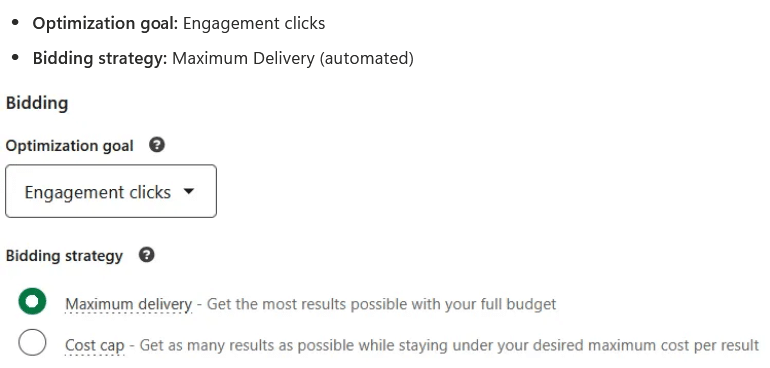
Maximum Delivery
Ideal for beginners. LinkedIn automates delivery and ensures you spend your daily budget.
Manual Bidding
Ideal for experienced advertisers. Start in between the recommended cost per click bid at ⅔ of the recommended bid and adjust if you are not spending consistently.
4.9 Replace funnels with a two layer demand structure
Modern SaaS buyers do not move through funnels. They explore. They revisit content. They share ideas internally. A simple two layer structure aligns with this non linear behavior.
Layer 1: Cold audience
- Audience: your ICP
- Content: insights, frameworks, short videos, founder POVs
- Goal: build familiarity and watch depth
- Output: warm signals like 25 and 50 percent video views
Layer 2: Warm audience
- Audience: video viewers, website visitors, company page visitors
- Content: customer stories, testimonials, case studies
- Goal: reinforce trust and show proof
5. How to Use Founder and SME Posts as Thought Leader Ads
The magic of Thought Leadership Ads is that you promote personal posts instead of designing new ads. This gives your message authenticity and preserves the organic engagement that already signals quality.
5.1 Why organic posts work better than designed Ads
When you boost an organic post, you keep:
- existing comments
- likes and reactions
- shares
- the poster’s natural tone of voice
- a feed native appearance
This makes the post feel like something your buyer wants to see, not something they are being sold.
5.2 How to add a personal post as an Ad
The workflow inside Campaign Manager is simple:
- create the campaign
- choose “Browse Existing Content”
- select “LinkedIn Members”
- search for the employee or creator
- request permission for the post
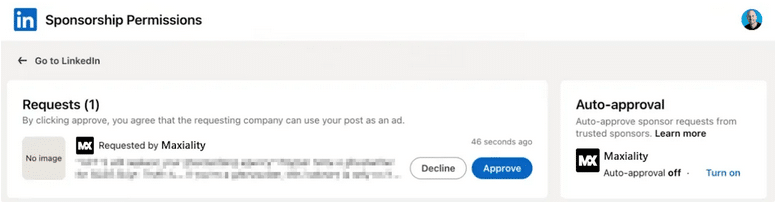
Once approved, you can promote any future posts with a single click if the profile owner enables auto approval.
5.3 Always edit the post before promoting It
Once a post becomes an ad, you cannot edit it anymore. Add your CTA and UTM link to the organic post after it stops growing and before you promote it. This keeps organic reach high and ensures paid tracking is clean.
5.4 Add the post to your campaign
After approval, select the post under LinkedIn Members in Campaign Manager and add it as an ad. The social proof remains intact.
5.5 How to choose which posts to promote
Choose posts that:
- performed above average organically
- sparked meaningful comments
- address a real ICP pain point
- showed strong watch depth
- carry clear expertise
5.6 What not to promote
Do not use TL Ads to promote:
- hiring announcements
- company awards
- internal updates
- generic leadership advice
- corporate slogans
5.7 Use more than just the founder
Thought Leadership Ads become more powerful when multiple voices participate. Promote content from:
- engineers
- product managers
- customer success
- influencers and customers
5.8 Recommended creative formats
High performing formats include:
- short videos (30 to 120 seconds)
- longer educational videos (3 to 10 minutes)
- posts with clear frameworks
- screen recordings with commentary
6. Video Thought Leader Ads best practices
Video is the strongest performing format for Thought Leadership Ads. SaaS buyers are far more likely to watch a real person explain a problem or walk through an approach than to engage with a static image. Good video TL Ads can drive high watch times, strong trust signals, and large retargeting pools.
6.1 Why video works so well
Video outperforms static posts for several reasons:
- viewers build a stronger emotional connection with a real person
- audio and visual cues make complex ideas easier to understand
- longer watch times provide clear interest and intent signals
- personal profiles can promote videos up to 15 minutes
- video content feels more genuine and less scripted
6.2 How to prepare the recording of your video for LinkedIn
To get the most from video TL Ads, you need to be aware of a few common challenges:
- inconsistent audio quality
- poor lighting or distracting backgrounds
- weak or slow hooks at the start
- overly scripted or stiff delivery
- limited on camera comfort from founders or SMEs
These can all be improved with repetition, simple gear, and tighter scripting.
A quick lesson we learned early on: the content of your message matters most, but basic lighting and audio can make or break performance. One of our first TL Ads campaigns used a founder clip that had great insights but terrible audio – laptop mic, echo, and background noise. The hook was strong, yet the watch rate tanked. People simply dropped off within the first few seconds.
When we re-recorded the exact same message with a proper microphone and a simple light source (a €50 ring light), the difference was dramatic. View rate increased by 32%, average watch depth doubled, and we finally started building a usable retargeting pool for the warm layer. The insight didn’t change. The delivery did.
The takeaway:
You don’t need a studio setup, but you do need clear sound, stable lighting, and a distraction-free background. So make sure you buy at least a ring light and a good microphone. You can buy decent quality gear for less than €100,-. These small adjustments immediately improve watch depth, which is the core signal Thought Leadership Ads rely on.
6.3 Best performing video content types for SaaS
Certain video formats consistently perform well for B2B SaaS:
- short problem plus insight clips: 30 to 60 seconds that call out a pain and offer a quick solution
- mini case studies: short customer stories highlighting the before and after
- founder POV or opinion pieces: direct, honest perspectives on industry mistakes or trends
- internal process breakdowns: how your team solves a problem internally
- customer testimonials: short videos of customers explaining the value they get
- deep dive educational videos: 3 to 10 minute clips that explain a complex topic clearly
6.4 A strong video structure to follow
You can keep video creation simple by using a repeatable structure:
- hook (first 3 seconds): call out a role, problem, or bold statement
- pain: describe a specific, familiar situation your ICP faces
- why common solutions fail: show understanding and empathy
- insight: share a clear, practical recommendation
- proof: add a short example, metric, or mini case study
- soft close: invite viewers to think differently or explore further
6.5 Technical guidelines for higher performance
Simple technical improvements can dramatically raise watch depth:
- always add captions for silent autoplay viewers
- frame shots at head and shoulders distance
- avoid cluttered backgrounds
- start fast and remove long intros
- upload video natively instead of linking to other platforms
- test multiple cuts of the same idea
6.6 Watch time benchmarks
Benchmarks vary by audience and content, but some useful reference points are:
- for longer videos, 25 percent watch time is solid and 50 percent is excellent
- for shorter clips, 50 percent watch time is a strong baseline
- 75 percent and above indicates high interest
- full completions, even at low percentages, are strong signals for retargeting
6.7 Repurposing video efficiently
A single long recording can produce a month of content with content repurposing. For example:
- 1 x 30 to 60 minute conversation
- 8 to 20 short clips for TL Ads
- multiple text posts derived from the transcript
- one or two mini case studies
- content for newsletters or blog posts
This approach keeps your content pipeline full without requiring daily filming.
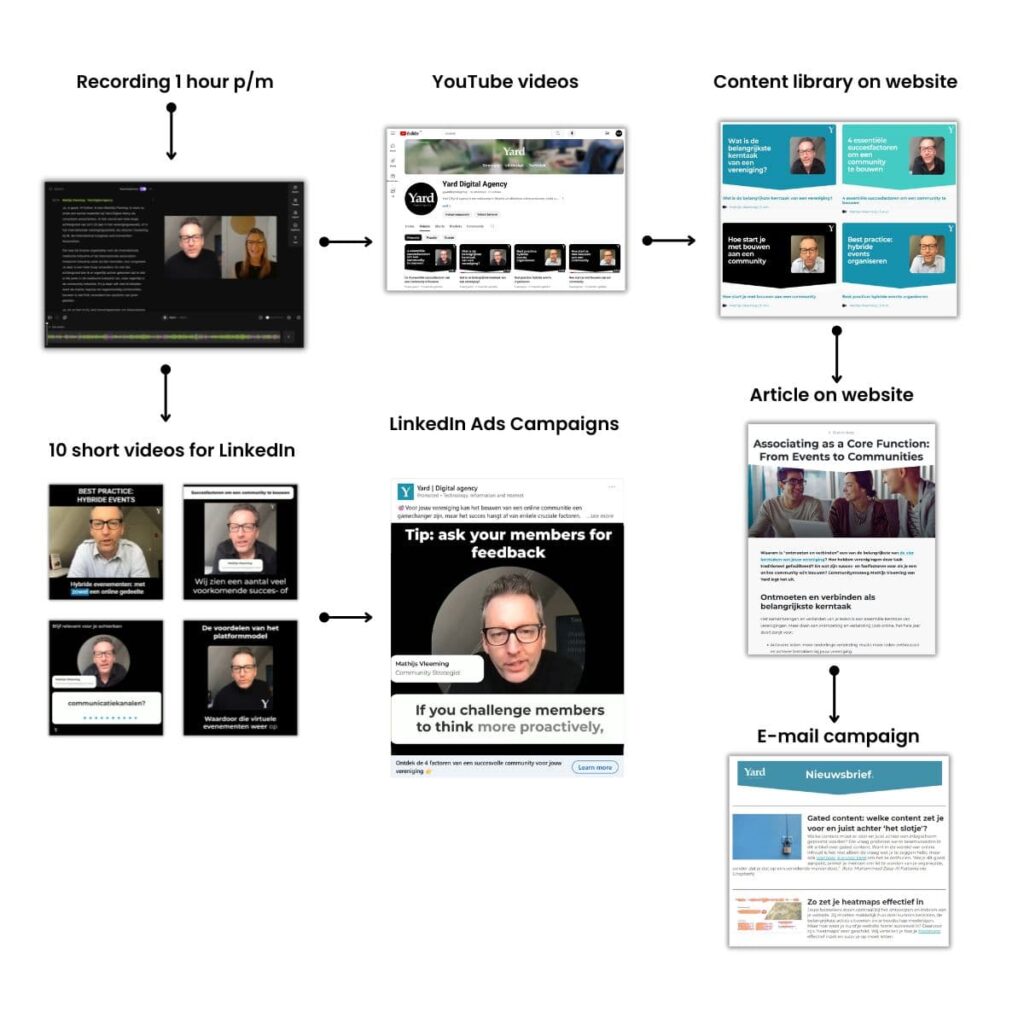
Here’s a screenshot of how we repurpose a 1 hour video recording of a founder into multiple pieces of content:
7. Building a warm retargeting layer for modern SaaS buying
Thought Leadership Ads are excellent at warming up your ICP, but the real power emerges when you follow up with proof based content through retargeting. A well structured warm layer lets you move from “this person is interesting” to “this solution works for people like me.”
7.1 Why retargeting matters
TL Ads generate:
- familiarity with your experts
- trust in your perspective
- awareness of the problems you solve
- engagement through video views and interactions
Retargeting turns those signals into momentum by showing case studies, testimonials, and specific outcomes to those who have already engaged.
7.2 The two layer structure recap
Your overall system has two main layers:
- Layer 1 (cold): educational thought leadership that introduces your POV
- Layer 2 (warm): proof driven content that shows your product working in the real world

7.3 Retargeting audience 1: Video Viewers
Video viewers are your richest signal. Someone who watches a meaningful portion of a TL video has invested attention, not just a click.
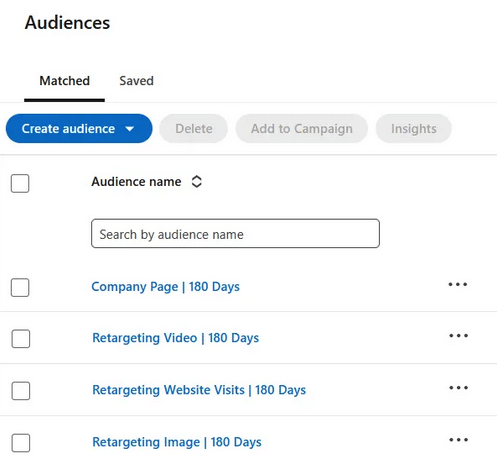
Recommended setup: build a 50 percent video view audience over 180 days. This captures people who have consumed substantial content and are ready for customer stories and proof.
You can also create a 25 percent view audience for scale, especially with longer videos, but prioritize 50 percent as the core warm segment.
7.4 Retargeting audience 2: Website Visitors
Website visitors are exploring your company more directly. They might be comparing solutions, checking features, or browsing content. Use LinkedIn’s Insight Tag to build an “All Website Visitors, 180 Days” audience.
7.5 Retargeting audience 3: Company Page Visitors
Company page visitors are often validating whether your business is credible. They check your positioning, employees, and presence. Treat them as a warm audience ready to see proof focused content.
7.6 Combine warm audiences for maximum effect
Your warm retargeting pool should typically include:
- 50 percent video viewers
- website visitors
- company page visitors
Use this combined audience to show:
- customer stories
- short testimonial videos
- before and after outcomes
- use case specific narratives
7.7 What not to use in retargeting
Avoid sending more top of funnel educational content to warm audiences. Retargeting should emphasize:
- proof
- results
- relevant examples
- credibility
Keep education in the cold layer and validation in the warm layer.
8. Modern demand gen layering strategy without funnels
Traditional funnel models assume buyers move through predefined stages. In reality, SaaS buyers explore in a non linear way. They see content, leave, come back, share posts, research vendors, and change priorities over time. A modern layering strategy acknowledges this and supports self directed exploration.
8.1 Layer 1: Cold Thought Leadership Layer
The cold layer introduces your thinking and your people to your ICP. It should feel like a helpful creator they follow, not a brand trying to talk at them.
Use this layer for:
- short videos that articulate pains and insights
- founder perspectives on industry problems
- frameworks and practical advice
- pattern recognition from your work with many customers
8.2 Layer 2: Warm Proof Layer
Once someone has engaged with your TL content, they are ready to see how you solve these problems with real customers. The warm layer reinforces trust and provides evidence.
Use this layer for:
- case study videos
- customer testimonials
- before and after stories
- customer specific use cases tied to outcomes
8.3 Why layering works better than funnels
This system works because it mirrors real behavior. Buyers:
- discover your content before they have a project
- come back when a pain intensifies
- share posts internally when a solution is needed
- revisit thought leadership and proof as they evaluate options
You are not forcing a progression. You are staying present with the right type of content for where they are mentally.
8.4 Creative requirements by layer
Cold layer content should:
- speak directly to your ICP
- focus on problems and patterns
- offer practical value with no pitch
- feel human and honest
Warm layer content should:
- show specific customer wins
- focus on outcomes and changes
- map clearly to your ICP’s situation
- reinforce confidence in your solution
8.5 When to add a third layer
Once your warm audience is large and engaged, you can add a third layer for high intent plays:
- demo request ads
- free trial offers
- invites to webinars or live sessions
- access to calculators, tools, or templates
Reserve this third layer for your hottest audiences, such as 75 percent viewers or repeat website visitors.
9. Metrics that matter for Thought Leader Ads
Thought Leader Ads succeed long before someone fills out a form. To measure them properly, you need to focus on signals that reflect engagement, learning, and growing demand, not just short term conversions.
9.1 View Rate
View rate shows how many impressions turn into at least three second video views. It reflects how strong your hook and opening seconds are.
- good benchmark: around 30 percent
- if low: tighten your hook, remove slow intros, make the problem clearer
9.2 Click Through Rate
CTR for TL Ads includes profile views, see more clicks, website clicks, and comment expansions. It is a proxy for curiosity and relevance.
- strong benchmark: 3.5 percent or higher for video TL Ads
- if low: your message may be too generic or not actionable enough
9.3 Watch Depth
Watch depth is one of the most important metrics for TL Ads because it shows how deeply viewers consume your content.
- 25 percent watch time: baseline interest
- 50 percent watch time: strong engagement
- 75 percent watch time: high intent
- 100 percent: rare but extremely valuable
9.4 Engagement Rate
Engagement from the right people is a qualitative goldmine. Saves, comments, shares, and tags indicate that your message resonates strongly enough to be remembered and shared.
9.5 Audience Penetration
Audience penetration tells you how much of your chosen audience has seen the ad.
- below 20 percent: you may need more budget
- 20 to 60 percent: healthy range
- above 70 percent: monitor for fatigue and rotate creative
9.6 Frequency
Frequency indicates how often the same user sees your ad.
- 4 to 10 impressions per month is a solid range for staying present without overdoing it
- if frequency is too low, you may not be memorable
- if it is too high, rotate creative
9.7 Website Traffic Quality
TL Ads should produce fewer but higher quality clicks. Look at:
- time on site
- pages per session
- visits to pricing or product pages
- repeat visits over time
9.8 Conversion Signals
Even though TL Ads are not conversion optimized, they influence conversions. Use a “How did you hear about us” field on forms to capture LinkedIn and thought leadership mentions that attribution tools miss.
9.9 The three metrics that matter most
If you need a simplified view, focus on:
- watch depth: shows learning and real attention
- warm audience growth: indicates how much future demand you are building
- self reported attribution: shows how TL Ads influence pipeline
9.10 How to troubleshoot performance of LinkedIn Thought Leader Ads
- low view rate: fix the hook and first few seconds
- high view rate but low CTR: add stronger insights or clearer takeaways
- good CTR but low watch depth: shorten videos and improve pacing
- high frequency with falling performance: refresh creative
- small warm audience: increase budget on the cold layer
- large warm audience but no movement: strengthen proof focused content
10. How to scale Thought Leader Ads successfully
Once your TL Ads are producing strong engagement and building warm audiences, you can begin scaling. Scaling is not just increasing budget. It is expanding voices, deepening coverage inside accounts, and turning your TL engine into a company wide asset.
10.1 Add more voices beyond the founder
Relying on a single spokesperson limits reach and relevance. To scale:
- bring in engineers to speak to technical buyers
- invite product managers to explain decisions and tradeoffs
- feature customer success for adoption and outcomes
- make room for RevOps or Ops to speak to process and systems
10.2 Promote influencer and customer content
Thought Leadership Ads allow you to promote posts from customers and external experts. This is a unique opportunity to scale user generated proof.
- boost customer testimonials and stories
- amplify influencer posts that align with your product’s value
- support partner content that reinforces your positioning
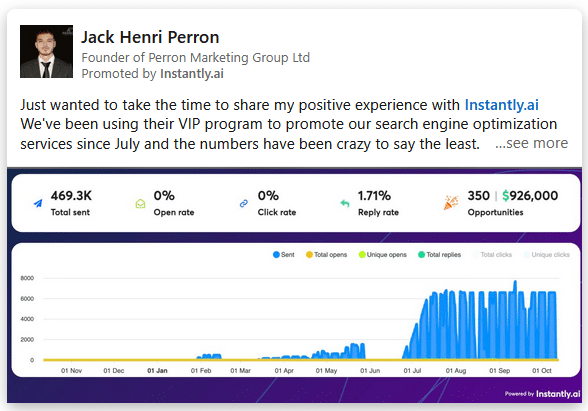
Here’s another example from Instantly, promoting a post from someone else:
10.3 Create a content flywheel
Use performance data from your TL Ads to identify winning concepts, then:
- turn them into new video variations
- expand into written content and carousels
- repurpose for email, webinars, and sales collateral
- feed learnings back into your organic content strategy
10.4 Refresh creative regularly
To avoid fatigue:
- update creatives every 4 to 6 weeks
- monitor frequency and audience penetration closely
- keep the idea but change the angle, hook, or example
10.5 Add a third layer for high intent offers
Once your warm audience is substantial, introduce a selective third layer:
- demo request ads
- free trial offers
- event invitations
- tool or template downloads
Target only your highest intent users, such as 75 percent viewers and repeat website visitors.
10.6 Amplify dark social
Strong TL content gets shared in Slack channels, group chats, emails, and internal docs. Recognize that each share expands your reach beyond paid and organic in the feed. Thought Leadership Ads are one of the best ways to fuel this kind of dark social distribution.
10.7 Use high intent (social) signals across teams
Sales and marketing can coordinate around signals like:
- profile views from target accounts
- repeated engagement from specific users
- company hub activity showing multiple viewers from the same account
These signals inform outbound, event invites, and tailored follow up.
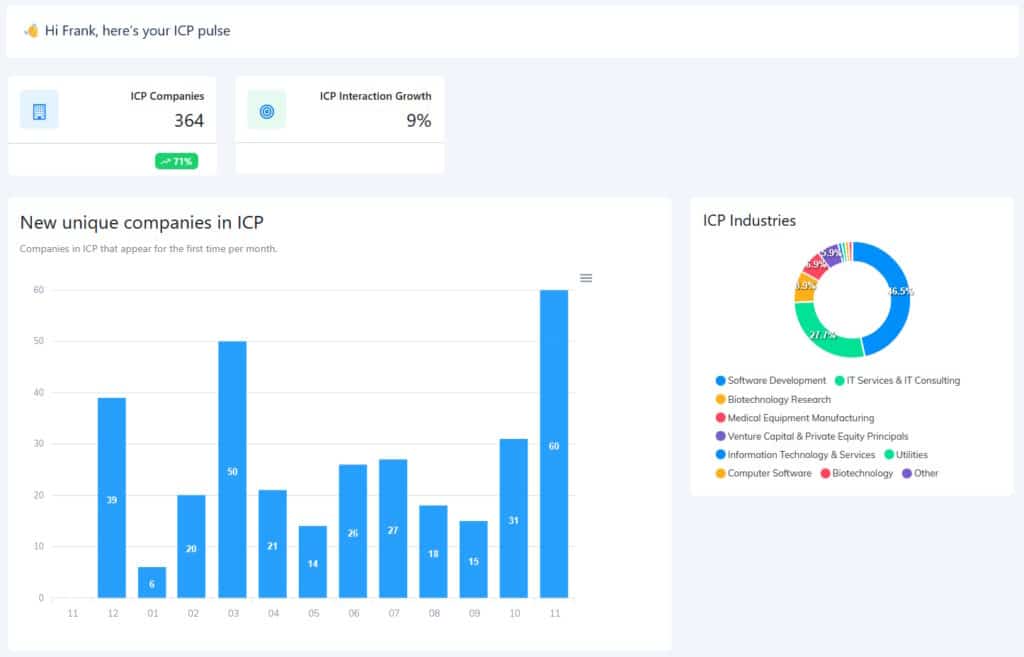
We collect all the intent data in our own proprietary SaaS tool that we use for all our clients. Here’s a screenshot of the dashboard that shows the intent signals of the companies in ICP:
10.8 Build a first party library of high performing content
Over time, you will accumulate:
- your best performing videos
- proven hooks
- effective frameworks
- reliable customer stories
Turn this into a first party library for sales, marketing, CS, and leadership to reuse.
10.9 Expand into new segments
With a proven TL engine, you can scale into:
- new verticals
- new geographies
- additional buyer roles
- different stages of company maturity
10.10 Integrate TL Ads with other channels
Thought Leadership Ads work best when connected with:
- email newsletters featuring your best clips
- webinars and live events built around topics that performed well
- SEO content that mirrors your thought leadership angles
- sales outreach that references specific posts a prospect engaged with
11. Common mistakes when running LinkedIn Thought Leader Ads
Thought Leader Ads are powerful, but they underperform quickly if treated like traditional LinkedIn ads. Here are the most common mistakes and how to avoid them.
The biggest mistakes to avoid:
Promoting the wrong content
- hiring updates
- milestone celebrations
- awards
- generic leadership quotes
- internal news
- anything that doesn’t provide real insight
Lack of ICP specificity
- vague posts that speak to “everyone”
- no role or segment callout in the hook
- no clear daily pain being addressed
Adding external links too early
- adding links before organic reach settles
- not editing in the CTA + UTM after the post stops growing
Expecting direct demo conversions
- treating TL Ads as lead gen
- judging performance by immediate pipeline instead of engagement and watch depth
Weak or slow hooks
- broad, dull, or generic opening lines
- intros that take too long to deliver value
Generic or soft proof in the warm layer
- testimonials with no metrics
- vague praise instead of concrete outcomes
- no clear before/after
Ignoring creative fatigue
- running the same post for too long
- rising frequency and dropping CTR
- repeated comments signaling boredom
Targeting too broadly
- huge audiences with mixed relevance
- roles that don’t influence or feel the pain
Incomplete warm audience setup
- only retargeting 25 percent viewers
- not including website visitors
- ignoring company page visitors
Ignoring the power of 50 percent viewers
- failing to treat mid-level watch depth as top intent
Trying to use TL Ads with lead gen forms
- forcing low-trust actions in a high-trust format
Boosting posts that performed poorly organically
- promoting ideas that your audience already ignored
- pushing budget into content that didn’t resonate
Using a single spokesperson
- depending only on the founder
- failing to represent technical, product, or CS voices
Using a corporate or overly polished tone
- writing like a brand instead of a person
- marketing jargon instead of human expertise
Ignoring comments and feedback
- missing buyer objections
- missing new content ideas
- missing questions that signal interest
- missing opportunities to build micro trust
12. Conclusion: turn Thought Leader Ads into a SaaS demand engine
Modern SaaS buyers don’t want to be pushed through funnels – they want useful insights from people who understand their problems. Thought Leader Ads let you deliver exactly that. With the right content and a simple warm-retargeting structure, they become one of the most reliable ways to stay in front of your ICP and generate organic, high-intent demand over time.