

There’s a pattern hiding in plain sight across the fastest-growing B2B SaaS companies right now.
Ahrefs scaled past $100M ARR with no Google Analytics, no attribution model, no A/B testing, no free trial, no sales team, and no quarterly marketing plan. Recall.ai closed a $38M Series B after their COO Amanda Zhu grew from near-zero to 40,000 LinkedIn followers in eight months, not by promoting their product, but by posting honestly about building a startup. Clay grew their LinkedIn company page to 100,000 followers not by hiring a content team, but by turning their most enthusiastic users into an informal creator army.
None of these are flukes. They’re converging on the same uncomfortable truth: the most effective B2B marketing in 2026 looks nothing like what the playbook says it should.
Why B2B Attribution Models Miss Most of What Builds Pipeline
The standard B2B marketing conversation goes like this: “We spent X on LinkedIn ads, got Y leads at Z cost per acquisition.” It sounds rigorous. It’s not, because it systematically undervalues everything that made those leads possible.
When a buyer fills out your form, they’ve already decided they trust you. That trust didn’t come from the ad they just clicked. It came from the six LinkedIn posts they read over the past three months, the podcast episode they heard in the car, the conference talk they saw on YouTube. None of that shows up in your attribution model. So you cut those investments and double down on the ad spend that “converts.”
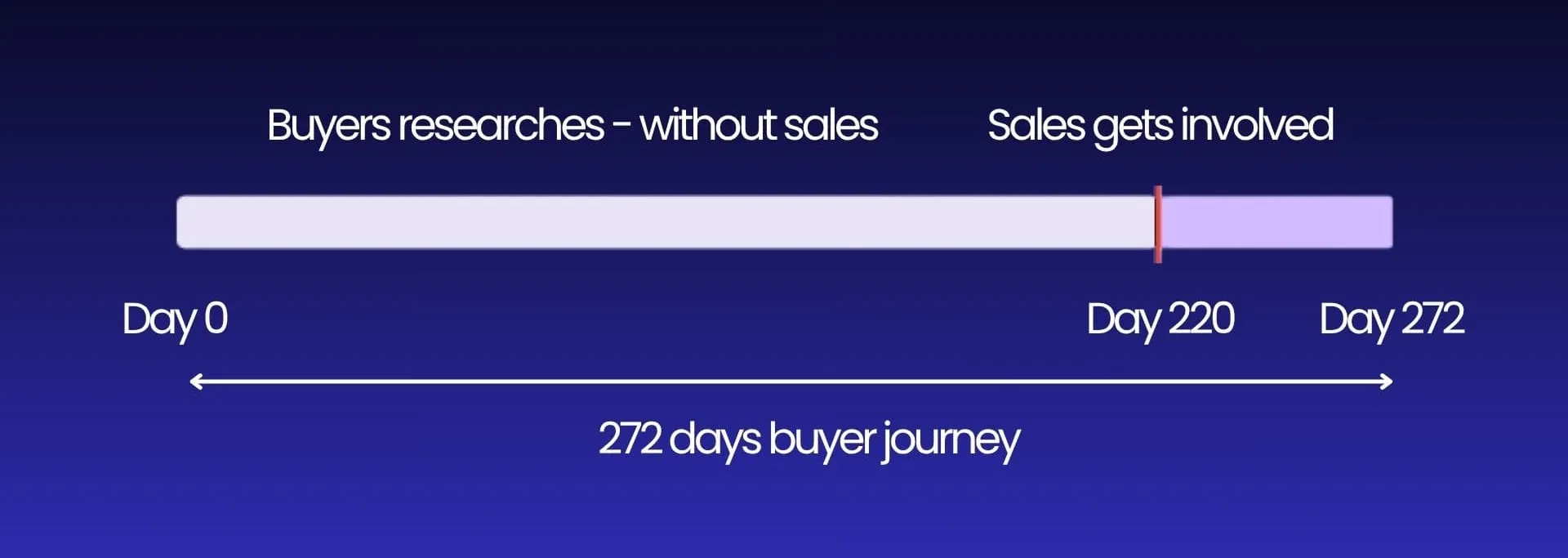
Dreamdata tracked actual deal journeys across thousands of B2B companies. Their 2026 benchmark report found that 81% of the research phase happens before sales ever gets involved, and the average buying journey now runs 272 days. Nine months of your buyer reading, comparing, forming opinions, before your sales team picks up the phone. For most of that window, your content is the entire sales process. If it’s not present, you’re not losing deals. You’re never entering them.
This is how companies paint themselves into a corner: optimizing for what’s measurable while starving the things that actually build buyers.
Tim Soulo, CMO of Ahrefs, describes this trap with unusual clarity. Ahrefs runs with zero attribution infrastructure. Their team makes decisions based on what they’re excited about, what formats they’re good at, and what seems useful to their audience. The result: a company that scaled to $100M+ ARR, bootstrapped, with 160 employees and no outbound sales. The marketing worked not because it was measured, but because it was excellent.
This isn’t an invitation to stop measuring. It’s an invitation to stop letting measurement determine strategy. Measure what you can, but let taste and conviction drive what you build.
Founder-Led Marketing: Your Most Powerful GTM Asset
The companies winning at B2B growth have figured out something the traditional marketing function hasn’t caught up with: your founder’s LinkedIn presence is not a “thought leadership initiative.” It’s your primary distribution asset by doing founder-led marketing.
When David Heinemeier Hansson (DHH) writes a post or publishes an essay, he’s not doing marketing. He’s doing something more valuable, building a decades-long body of work that makes 37signals impossible to ignore. People buy Basecamp and HEY not just because the products are good, but because David Heinemeier Hansson has spent 20 years being one of the most distinctive voices in software. The brand is the founder. The founder is the brand.
This doesn’t require 20 years. Amanda Zhu at Recall.ai built a 40,000+ LinkedIn audience in eight months. The content wasn’t product marketing. It was authentic documentation of building an infrastructure company: the decisions, the challenges, the moments of figuring it out in public. Her ICP followed because they were living the same journey. The result: inbound pipeline from companies like HubSpot and Datadog, before the Series B even closed.
Alina Vandenberghe, co-CEO of Chili Piper, has the clearest commercial proof point of any founder in this research: 50% of Chili Piper’s open pipeline is directly attributed to her personal LinkedIn presence. Not follower count, not engagement rate, pipeline. She’s also measured something most founders overlook. Her company page has double her follower count and gets less than a quarter of her reach. A personal profile with half the audience outreaches the company page by 4 to 1. That gap doesn’t close with better company page content. It’s structural.
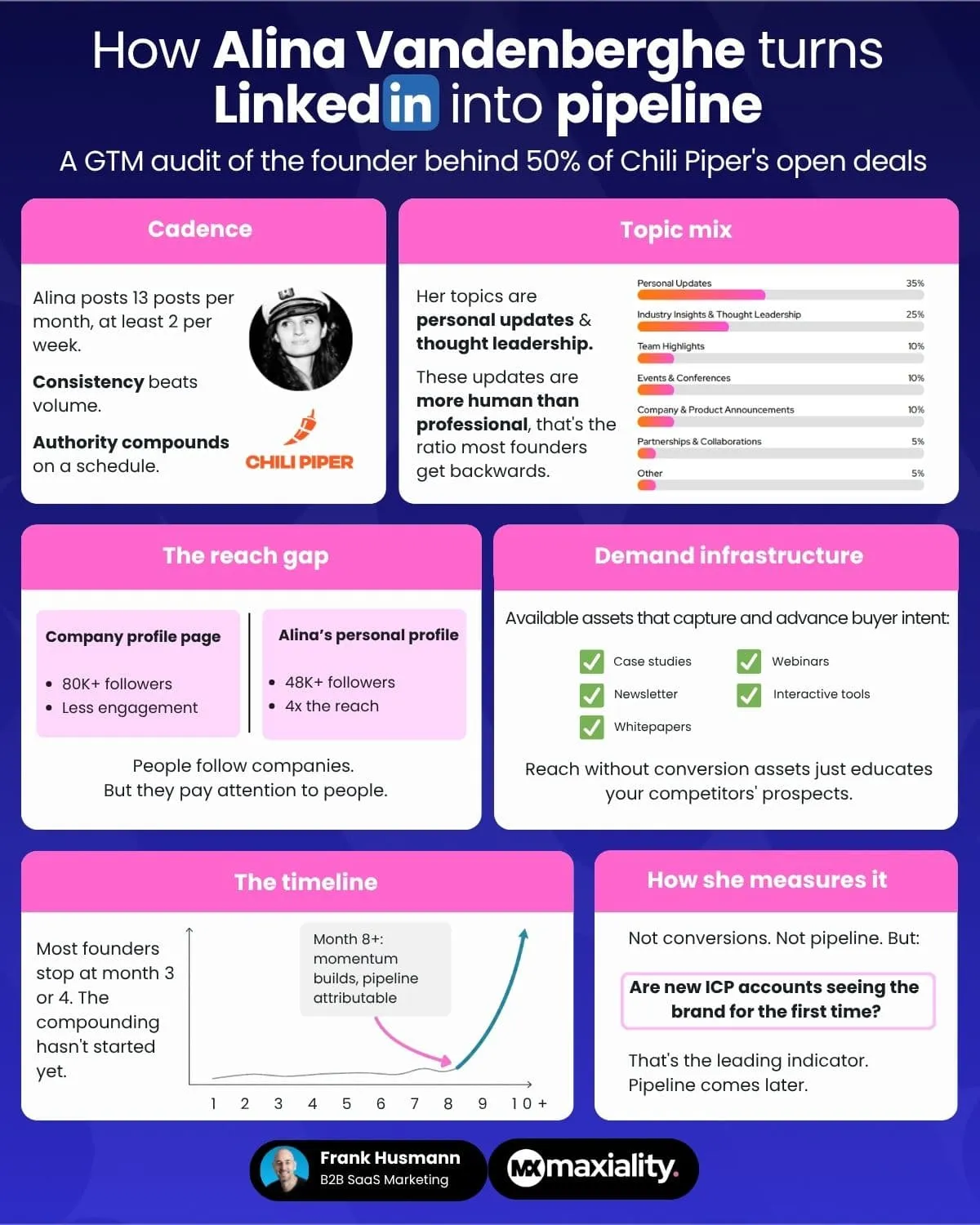
What Alina is honest about that most founder-brand content glosses over: it took her eight months of struggling to hit publish before she found any momentum. Eight months of low engagement, uncertain framing, and no obvious signal that it was working. The compounding effect that everyone talks about doesn’t start until after that period. Founders who quit at month three or four aren’t failing. They’re just stopping before the curve turns.
The founder’s public presence made the product credible before sales conversations began. The sales team inherited trust that content created.
Wynter surveyed 100 B2B buyers (source) and found that 71% described a research phase that happens entirely without vendor involvement. Buyers form their shortlist, build their mental ranking, and often reach a near-final decision before engaging with any vendor. What they find during that phase, whose name comes up, whose thinking resonates, who seems to understand the problem, determines whether you’re in the room or not.
How Often Should Founders Post on LinkedIn?
Building a founder brand doesn’t require posting every day. It requires showing up regularly enough that your audience develops an expectation, and then meeting it.
For most B2B executives, this means two to three posts per week, built in one weekly session rather than manufactured daily. The batching approach, 90 minutes with five to seven posts drafted in one sitting, produces better content than daily forced production. You’re in creative flow rather than fighting a blank page before 9am meetings.
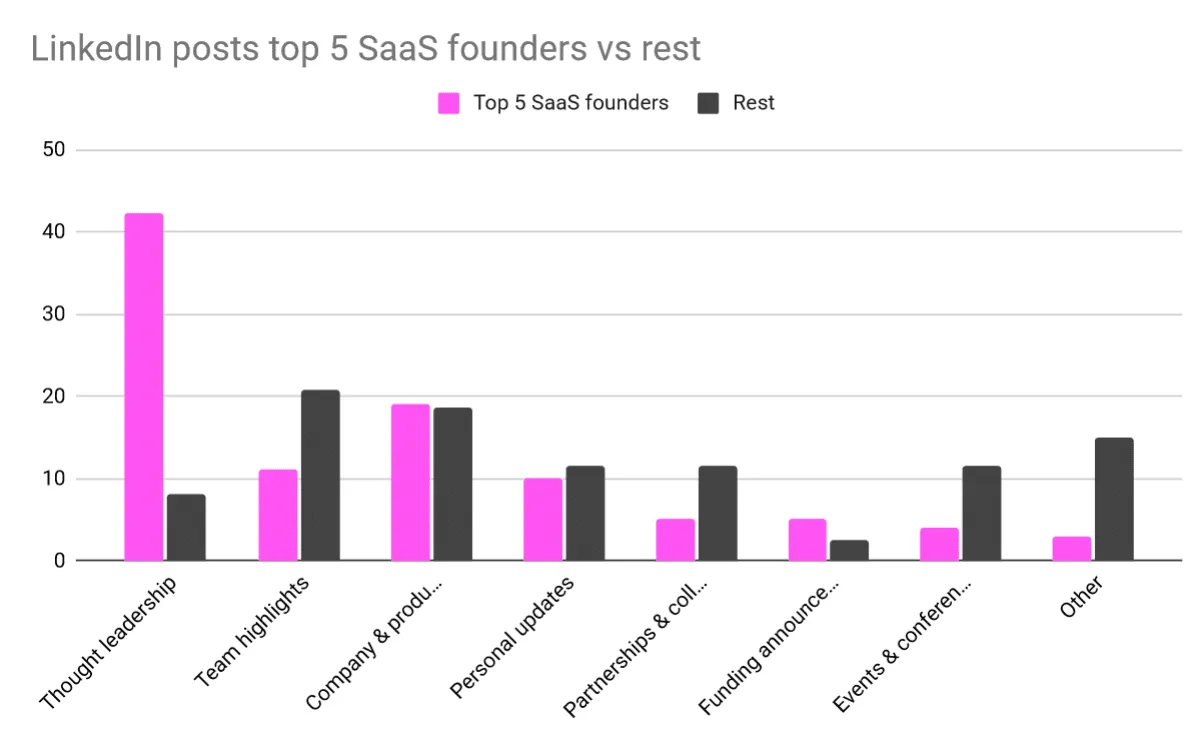
The gap between founders who do this and those who don’t is larger than most people realize. We analyzed more than 3,000 LinkedIn posts across 100+ SaaS founders. The top performers averaged 15 posts per month. The average founder: two. More striking than the frequency gap is what they were posting. Top founders built 42% of their content around thought leadership: their own frameworks, observations, and positions. The average founder? 8%. The remaining 92% was product updates, event announcements, and reposts of other people’s content. Over half of all posts from average founders were reposts. The top performers: 4%. Most founders aren’t building a body of work. They’re amplifying everyone else’s.
The format that consistently outperforms: specific story, extracted principle, practical application. Not “five things every CMO should know.” A specific situation, what it revealed, and what the reader can do with that insight. The more specific and personal the story, the more universally it lands. That’s why Amanda Zhu’s startup-building posts outperformed every piece of Recall.ai’s product content.
Why Generic Content No Longer Works in B2B SaaS
AI can now produce a LinkedIn post, a blog article, and a podcast episode outline in minutes. The floor on content quality has risen dramatically. Generic content has been completely commoditized. The companies winning on content are those where a human being with real opinions is making real editorial choices.
Jess Cook at Vector calls this the taste gap, and it’s widening. Her team’s podcast, “This Meeting Could Have Been a Podcast,” works because it captures something unreplicable: authentic disagreement and real decision-making chemistry between the VP of Marketing and the CEO. You cannot automate that. You cannot fake it. It works because it’s real.
Ashley Faus at Atlassian frames it this way: the hardest and most defensible thing to build is depth of ideas. It’s not enough to be excellent at your job. You have to codify your expertise into frameworks and mental models that other people can use. The practitioner who can articulate why they’re good, not just demonstrate that they are, has built something truly hard to replicate.
David Heinemeier Hansson (DHH) has done this over two decades. Ahrefs CMO Tim Soulo codified this into a reversed content stack: start with a LinkedIn post to test the hook, expand into an article if the response warrants it, turn great articles into conference talks, repurpose talks into podcast appearances. A system built from years of learning what works, not a content plan assembled from best practices.
Before you build a content calendar, build frameworks. What are the two or three proprietary mental models that represent your company’s unique insight? Those frameworks, not your blog post frequency, will determine whether your content builds real authority or just fills a feed.
LinkedIn for B2B SaaS Founders: What Changed and What Works Now
LinkedIn organic reach is down approximately 65% from its peak. Average creator follower growth dropped 20% through 2025. If you built your B2B content strategy on the assumption that consistent posting would drive steady follower growth, you’ve probably already noticed the slowdown.
The aggregate data obscures what’s actually happening. The top 1% of LinkedIn creators are growing 157 times faster than the average. The platform hasn’t stopped rewarding creators. It’s stopped rewarding volume and started rewarding genuine engagement signals: saves, thoughtful comments, repeat attention from specific audiences.
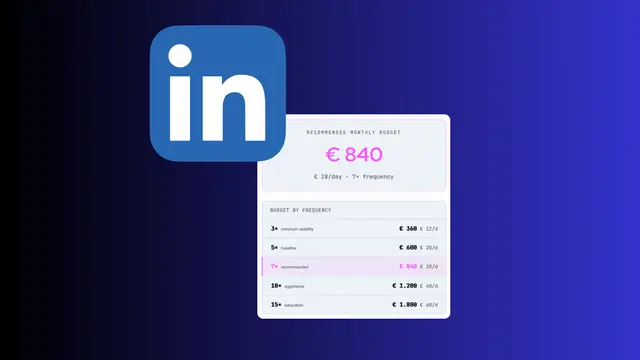
Minjae Ormes, LinkedIn’s VP of Brand, points to two structural platform shifts. First, LinkedIn is prioritizing video, especially vertical format, as a primary content surface. Second, thought-leader ads, paid amplification of personal content from individual accounts rather than company pages, are among the highest-performing ad formats on the platform. Companies should be amplifying their executives’ best organic content with paid support, not running separate corporate ad campaigns alongside it.
Alina Vandenberghe has the numbers to back this up. Standard LinkedIn image ads average 0.05% engagement. Her thought-leader ads ran at 2.21%, with a $105 CPM. Other companies running the same format have reported 6-8% engagement. That’s a 40 to 150 times performance gap over standard ad formats, consistently, across different companies and industries. This isn’t an anomaly or a trend. It’s a reliable lever that most B2B teams are leaving untouched because they’re still running creative from the company page.
Company pages have become secondary to personal profiles. The brands winning on LinkedIn have invested in individual thought leaders, founders, executives, subject matter experts, and are using company infrastructure to amplify those voices, not replace them.
Clay’s 100K follower company page is the clearest example. The followers didn’t accumulate because Clay posted great content from the company account. They accumulated because Clay’s users were posting Clay-built workflows from their personal accounts, and the company page became a credibility anchor those posts pointed toward. The creator community was the engine. The company page was the destination.
Finding Your Founder-Led GTM Strategy: Two Models That Work
Two data points in this research sit at opposite ends of the same axis.
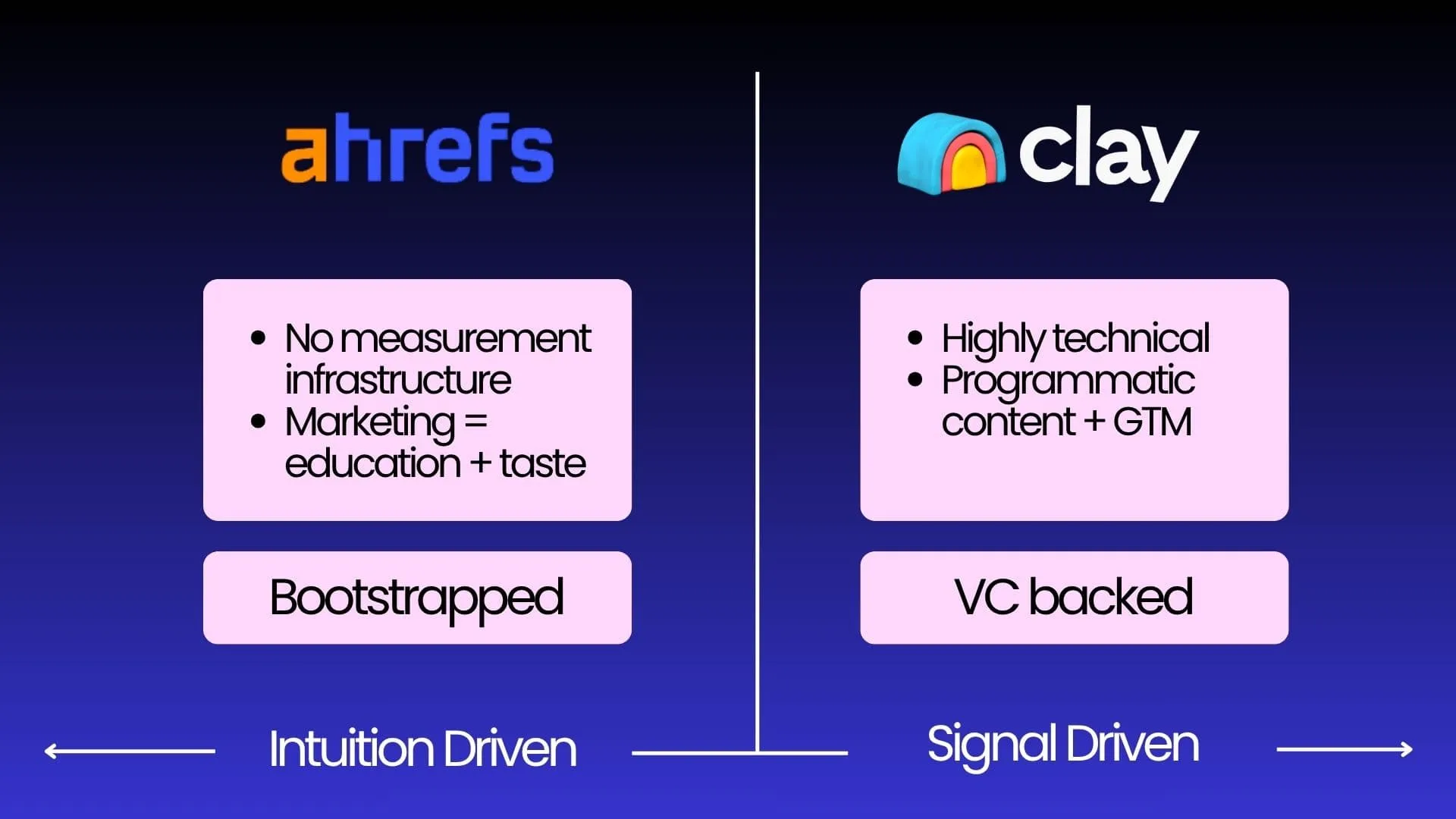
Ahrefs: pure intuition, no measurement infrastructure, marketing driven entirely by what the team finds interesting and useful. $100M+ ARR, bootstrapped.
Clay: highly technical, signal-driven, programmatic content generation through creator programs and automation tooling, contact-level intent data as core GTM infrastructure. $500M+ valuation.
Both are winning. Not because both approaches are equally valid in all contexts, but because each approach matches its company’s DNA. Ahrefs works because Tim Soulo doesn’t find attribution dashboards interesting, and that same sensibility produces content that doesn’t feel like it was made by a committee. Clay works because their ICP is technical, their team has engineering capacity in marketing functions, and their product is literally about data enrichment and automation. The marketing reflects the product.
The worst outcome is trying to run both simultaneously and doing neither well. The highest-leverage question for a founder-led GTM strategy isn’t “what should our content strategy be?” It’s “what does excellence look like in our hands specifically?” Then build a system that produces that, consistently, over 12-24 months.
How to Measure Founder-Led Marketing Without Relying on Attribution
The argument against attribution dashboards is not an argument against measurement. It’s an argument against measurement that crowds out excellence.
Three brand metrics worth tracking for any B2B company building a founder-led GTM motion:
Brand consideration rate: what percentage of your ICP links your brand to at least one relevant buying situation? Not awareness. Contextual recognition: being top of mind in the moment someone recognizes the problem you solve.
Consideration depth: how many buying situations does your brand get linked to per prospect? A company associated with one narrow use case is fragile. A company associated with five related problems is hard to displace.
Competitive share: of all the problem-solution memories in your category, what percentage do you own? Relative mental availability, not just “do they think of us,” but “do they think of us before they think of competitors.”
These can be measured with a simple annual survey of non-customers in your ICP. No sophisticated MarTech stack required. The payoff is a brand measurement framework that tells you whether your founder-led content is building durable market position, not just filling a feed.
Alina Vandenberghe uses a different approach that sits between the Ahrefs model (no measurement) and a full attribution stack: she tracks first engagement, how effectively Chili Piper activates target accounts to see and interact with their brand for the first time. Not conversions, not pipeline, just first contact with the brand. It’s a leading indicator that tells her whether the content is reaching new buyers in the ICP, before there’s any commercial signal to measure. For founder-led teams without a full analytics infrastructure, it’s a practical starting point.
What you report teaches the business what to value. If you only report leads and conversion rates, your organization will systematically underinvest in the things that make future leads cheaper to acquire. Build a reporting cadence that includes brand metrics alongside pipeline metrics, and you change what your organization believes is worth building.
The Founder-Led Marketing Playbook: What Actually Compounds
The companies growing fastest in this research share conditions that have nothing to do with budget, headcount, or technology.
They have a founder or executive willing to be public: to share real opinions, to be wrong occasionally, to build a body of work over years rather than campaigns. Alina Vandenberghe’s framing on this is the most honest in all the research: only pursue this if it brings you real satisfaction, otherwise delegate to an internal evangelist who it does energize. Founders who perform enthusiasm they don’t feel either burn out or come across hollow. Both outcomes are worse than not starting.
They produce content that reflects actual expertise, not “five tips” assembled by a content team, but frameworks and observations that only exist because someone has been thinking hard about a specific domain for a long time.
They’ve made peace with the fact that the most important things they’re doing for brand growth don’t show up cleanly in attribution reports, and they’ve built a measurement framework that makes those investments legible without requiring them to convert immediately.
And they’re playing a longer game than their competitors are comfortable playing.
That last condition is the real differentiator. Not the LinkedIn strategy, not the content format, not the posting frequency. The willingness to invest in compounding before it’s necessary, and to sustain that investment before the results are visible.
Of the 100+ founders we analyzed, the gap between top performers and the average wasn’t talent or time. It was a single decision: stop amplifying other people’s thinking and start building your own. The top performers did that consistently, across hundreds of posts, long before it paid off. The average founder waited to see results first.
That’s the order of operations most founders get wrong.
Insights and analysis synthesized from publicly available interviews with David Heinemeier Hansson (DHH of 37signals), Tim Soulo (Ahrefs), Amanda Zhu & David Gu (Recall.ai), Varun Anand (Clay), Minjae Ormes (LinkedIn), Ashley Faus (Atlassian), Jess Cook (Vector), and Alina Vandenberghe (Chili Piper). Additional data: Dreamdata LinkedIn Ads Benchmark Report 2026; Wynter B2B Buyer Research Study; our own proprietary LinkedIn analysis of 3,000+ posts across 100+ SaaS founders.