


Most of a B2B buying decision happens before the buyer talks to anyone in sales. In Dreamdata’s 2026 analysis of real deal journeys, the average B2B buying journey ran 272 days, and 81% of the research phase happened before sales got involved. By the time a prospect fills in your demo form, they’ve already decided what kind of solution they want and which vendors feel right. The sales call mostly confirms that.
The numbers behind the invisible journey
Dreamdata’s LinkedIn Ads Benchmark Report 2026 is based on tracked deal journeys, not on what buyers say about themselves. That makes these figures harder to wave away:
| 2026 | Earlier | |
|---|---|---|
| Average B2B buying journey | 272 days | 211 days (2024) |
| Research done before sales gets involved | 81% | 70% |
| Buying committee | 10 people | 6.8 people |
| Touchpoints per deal | 88 |
Those 88 touchpoints are spread across four channels on average.
Buyers confirm the same thing when you ask them. Wynter surveyed 100 B2B buyers, and 71% said they finished their research before contacting any vendor.
Put together, that’s roughly seven months of buyers reading and talking to peers before your sales team even knows they exist. For most of that window, your content and your reputation are the whole sales process.
How the decision forms before you’re in the room
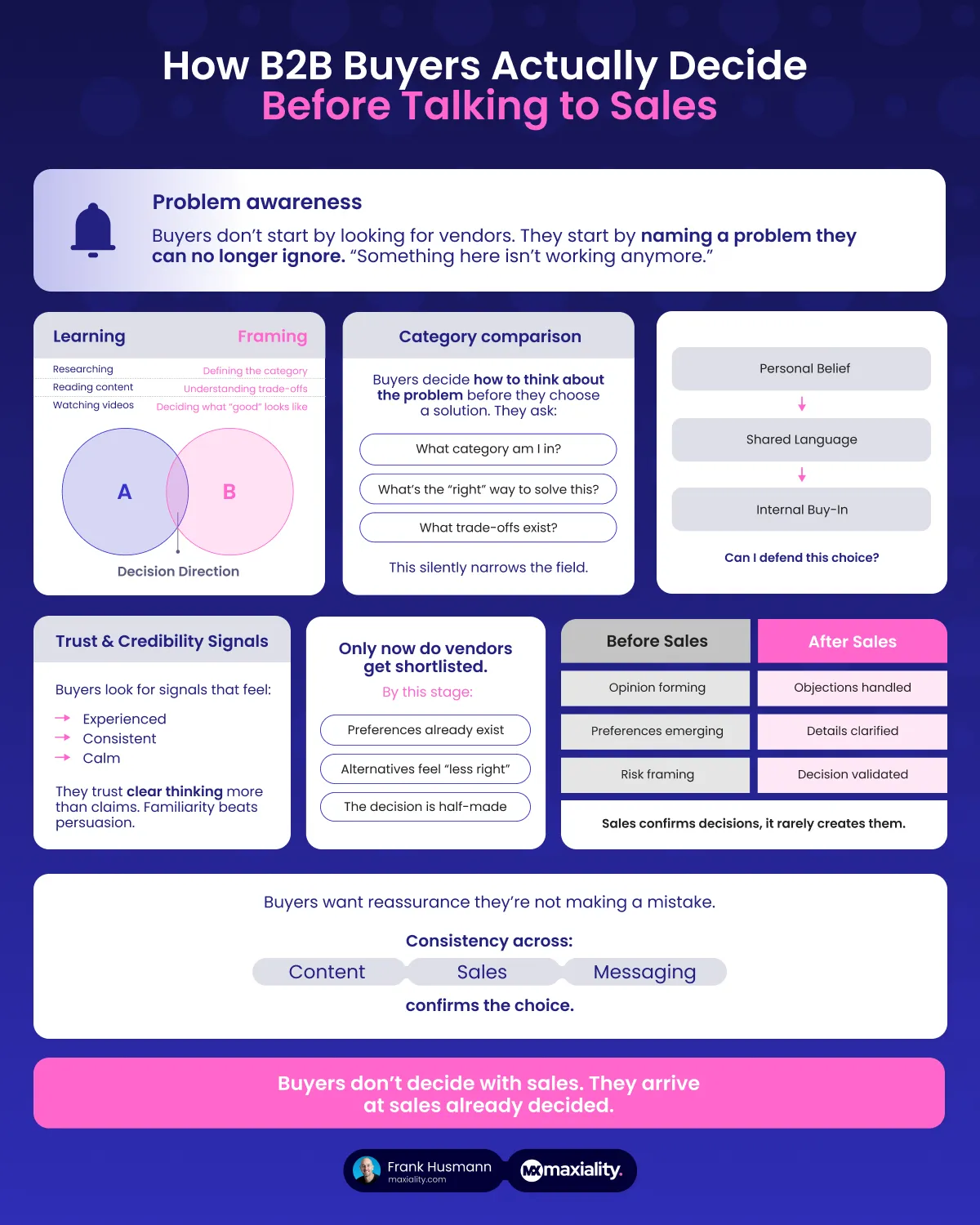
Buyers don’t start by looking for vendors. They start by naming a problem they can no longer ignore: “something here isn’t working anymore.” What follows is a sequence I see in almost every deal we later trace back.
Learning and framing. They research, read and watch videos, and while they do, they define the category and decide what a good solution looks like. That frames the questions they ask: what category is this, what’s the right way to solve it, and which trade-offs come with each option? Those answers quietly narrow the field before any vendor is involved.
From personal belief to internal buy-in. The person who found the problem has to turn their own conviction into language the rest of the company shares, and then into buy-in from a committee that’s now ten people on average. That internal step is where most deals stall after the demo. The question underneath all of it is simple: can I defend this choice?
Trust signals. To answer that, buyers look for sources that feel experienced, consistent and calm. Clear thinking beats claims, and familiarity beats persuasion.
Only then: the shortlist. By the time vendors get shortlisted, preferences already exist. Most buyers already have two or three names in mind, and whether you are one of them is what I call the shortlist threshold. The alternatives feel “less right”, and the decision is half made.
That’s why the split looks the way it does:
| Before sales | After sales |
|---|---|
| Opinions form | Objections get handled |
| Preferences emerge | Details get clarified |
| Risk gets framed | The decision gets validated |
Sales confirms decisions. It rarely creates them. What buyers want from the last stretch is reassurance that they’re not making a mistake, and they get it when your content and your sales conversations say the same thing.
Where your hidden pipeline is researching you
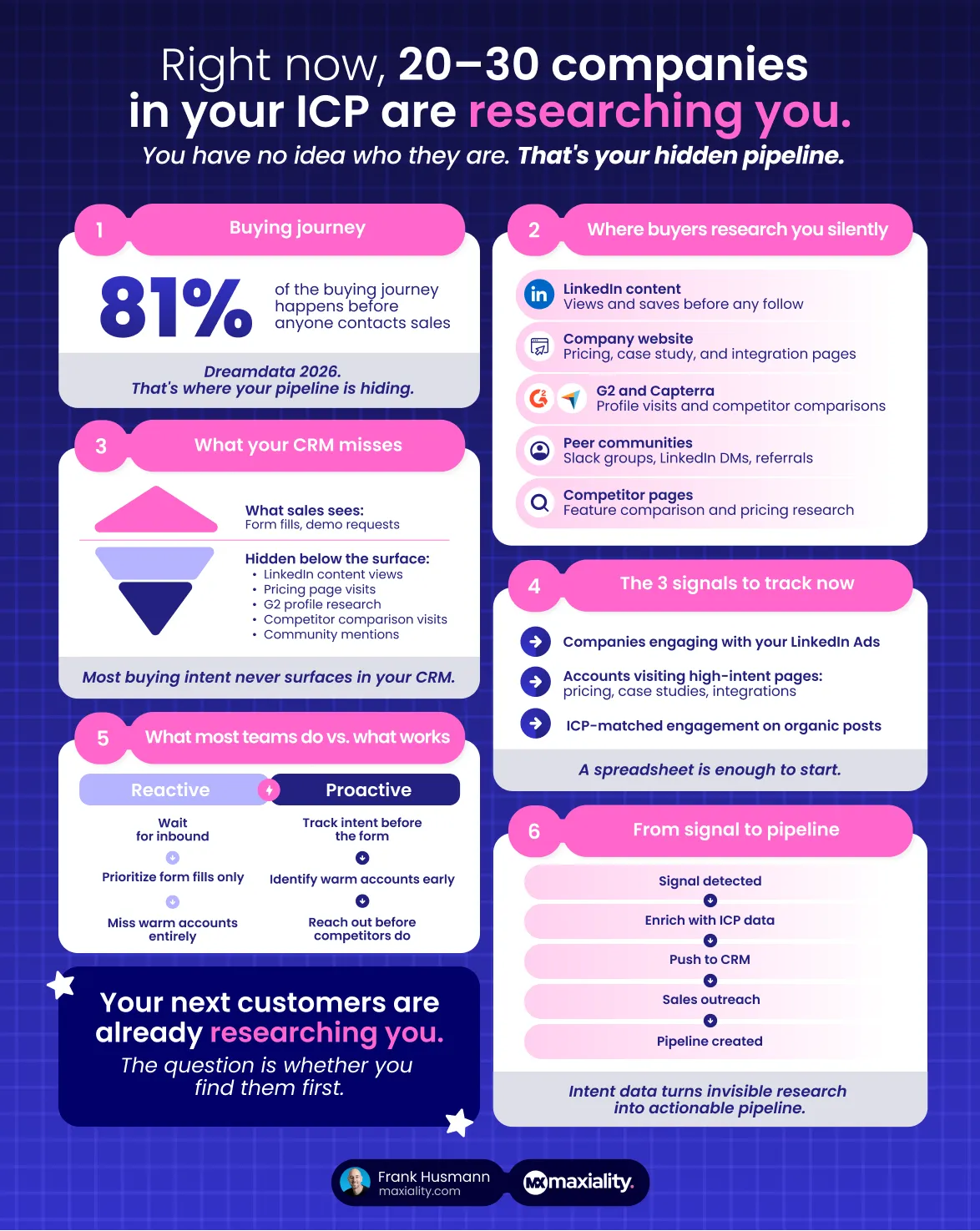
Your CRM isn’t your pipeline. It’s the part of your pipeline that raised its hand.
I ran a signal campaign for a client last quarter. Within 30 days, 23 companies that matched their ICP had visited the pricing page. The founder was actively in conversation with 2 of them. The other 21 were researching in places that never reach a CRM:
- LinkedIn content. Views and saves, often before anyone follows you.
- Your own website. Pricing, case studies and integration pages, visited anonymously.
- G2 and Capterra. Profile visits and side-by-side comparisons with competitors.
- Peer communities. Slack groups, LinkedIn DMs and referrals between peers.
- Competitor pages. Feature comparisons and pricing research.
Most sales teams wait for inbound and only act on form fills. That’s how warm accounts in active research get missed entirely, and how a competitor ends up on the shortlist first.
What to do about it
There are two jobs here, and most companies only do one of them.
Be present while they research. Buyers form their view over months and many touchpoints, not in a neat funnel. So every post, article and ad should work as if it’s the first and only thing a buyer sees from you: one problem and a clear point of view on it. Founder-led content does this better than polished company messaging, because buyers trust a person they’ve watched think. Thought Leader Ads on LinkedIn put those posts in front of the whole buying committee, not just the one person who follows the founder.
See who’s researching. You don’t need a big tool to start. These three signals cover most of it:
- Companies engaging with your LinkedIn Ads.
- Accounts visiting high-intent pages: pricing, case studies and integrations.
- ICP-matched engagement on your organic posts.
A spreadsheet is enough at first. Once it works, the flow becomes routine: a signal comes in, gets enriched with ICP data, lands in the CRM, and sales reaches out while the account is still warm. That’s the difference between reacting to form fills and finding warm accounts before a competitor does.
When sales does call, remind them what they’re dealing with. This buyer has been researching for months. They’re not cold. More on the content side in founder-led marketing: what the fastest-growing B2B SaaS companies do.
FAQ
Does this mean B2B buyers don’t want to talk to sales?
They do, but later and for a different reason. They come to sales to confirm a direction and get the details right. A sales team that treats the first call as the start of the conversation is about seven months late.
Does the 272-day journey apply to smaller SaaS deals too?
The exact number depends on deal size and how many people sign off. Smaller deals move faster. The pattern holds, though: most of the forming happens before the first sales conversation, and that’s what your content and positioning have to cover.
How can you see who is researching you if they never fill in a form?
At company level, not person level. LinkedIn shows which companies engage with your ads, website visitor identification shows which companies visit your key pages, and engagement on organic posts can be matched against your ICP. That’s enough to know which accounts are warming up.
What’s the first thing to change?
Start tracking the three signals above for your target accounts, even by hand. Within a few weeks you’ll see which accounts are researching, and that usually shows quickly whether your content reaches the right companies.
Next step
Curious which accounts are researching you right now, and whether your content reaches them? The GTM Signal Audit gives you a first read in a few minutes. If you’d rather talk it through, book a call.